The First 4th of July
Programs and Events Coordinator Armonee Wilkins examines the ways in which Americans commemorated the initial anniversaries of independence during the Revolutionary War, as well as how New Yorkers observed the 4th of July while under British occupation.
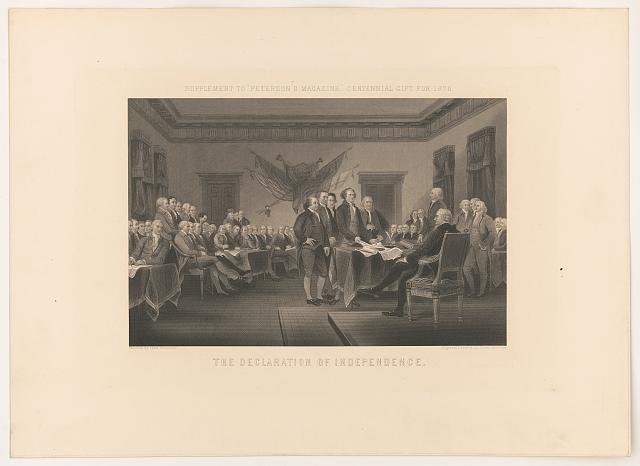
The Declaration of Independence / painted by John Trumbull, Courtesey of the Library of Congress
Every year on the 4th of July, Americans come together for fireworks, parades, concerts, and cookouts. While these traditions are now closely tied to Independence Day, the earliest celebrations were quite different. They were not held during a time of peace, but during a war in which no one knew the outcome.
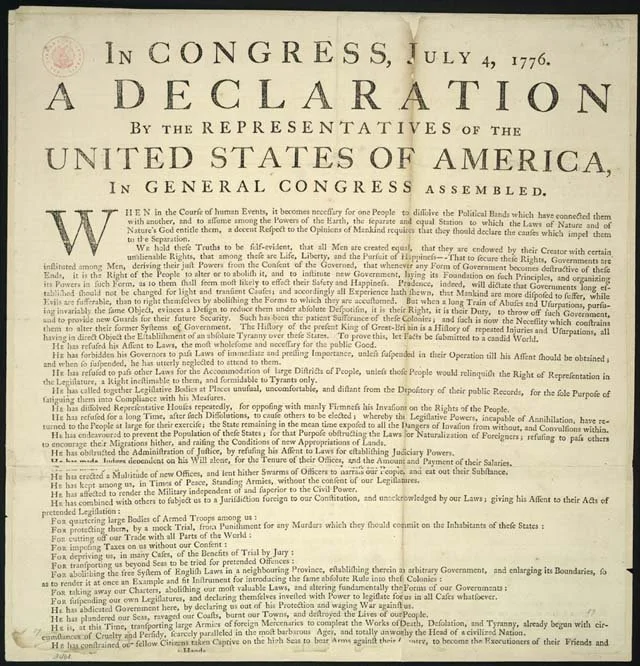
“This is the surviving fragment of John Dunlap's initial printing of the Declaration of Independence, which was sent to George Washington by John Hancock, president of the Continental Congress on July 6, 1776. General Washington had the Declaration read to his assembled troops in New York on July 9” Courtsey of Library of Congress
On July 4, 1776, the Second Continental Congress adopted the Declaration of Independence, saying the thirteen colonies were "Free and Independent States.[1] " Still, not many people celebrated immediately. News spread slowly, and printed copies of the Declaration took days or even weeks to reach different colonies. For most Americans, July 4th was just another day. New York soon became one of the first places where the Declaration inspired public action.
On July 9, 1776, General George Washington assembled thousands of Continental soldiers on the Commons of New York City, now known as City Hall Park, to hear the Declaration read aloud [2]. Amid uncertainty as British forces prepared to attack New York, the words provided both purpose and resolve. This moment transformed the conflict from a dispute with Great Britain into a struggle for national independence.
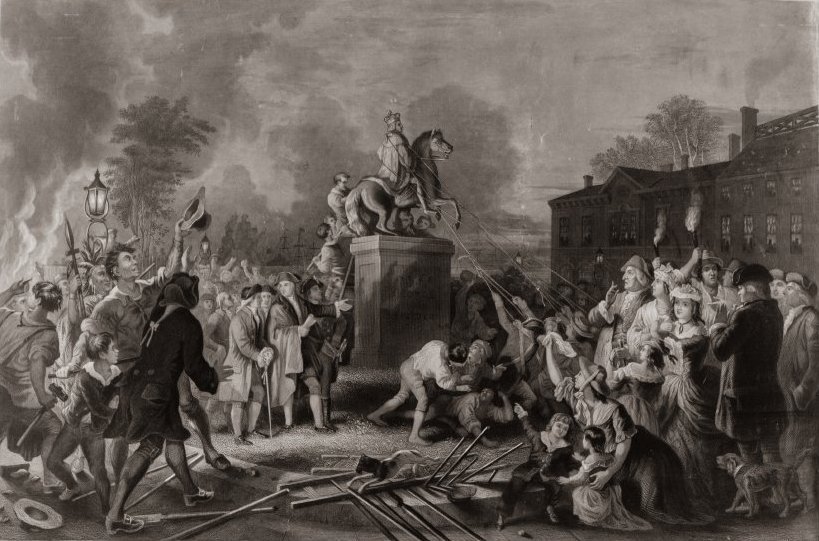
Courtesy of Fraunces Tavern Museum
The excitement continued into the evening as soldiers and civilians marched south to Bowling Green, where they dismantled the gilded equestrian statue of King George III.
Erected only a few years earlier to honor the King, the monument now symbolized British authority in the colonies. Under the gilding, the statue was made of lead, much of which was melted down and cast into an estimated 42,000 musket balls for the Continental Army [3]. Through this symbolic act, an image of royal power was transformed into ammunition for the Revolution.
A short walk away stood Fraunces Tavern. Although the Tavern was not the site of these events, it was in the heart of a city that was rapidly emerging as the center of the Revolutionary War. Merchants, soldiers, sailors, and political leaders frequented its doors to exchange news, discuss military campaigns, and debate about the uncertain future of the colonies. Taverns functioned as essential gathering places where information circulated rapidly and public opinion was formed.
The next summer marked the one-year anniversary since the Declaration of Independence was signed. Historians widely acknowledge that the first official celebration of Independence Day was on July 4, 1777 in Philadelphia [4]. The church bells of the city were rung, there was a feast for the Continental Congress, flags were hoisted on ships, and fireworks exploded at night [5].
The Pennsylvania Evening Post reported on July 5,1777:
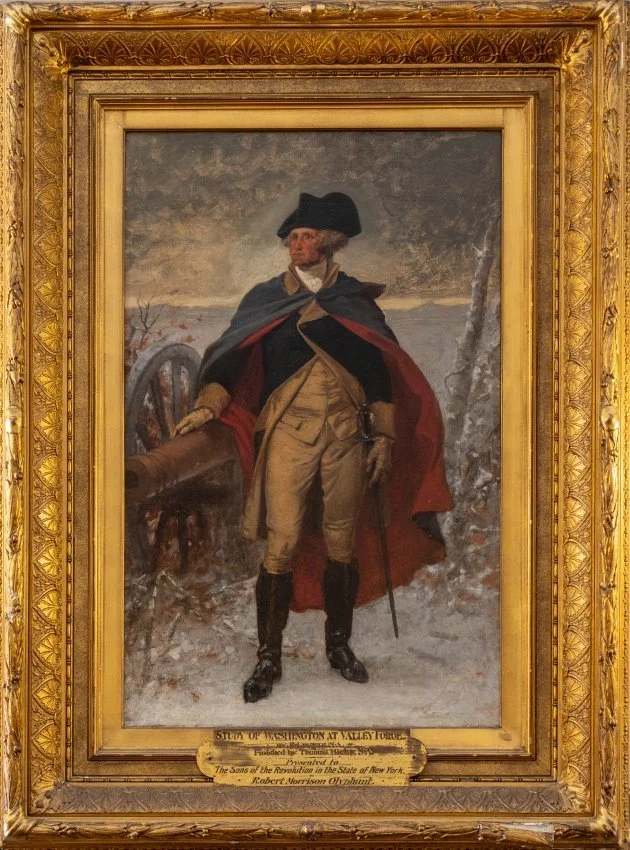
Study of Washington at Valley Forge. Courtsey of Fraunces Tavern Museum
"The evening was closed with the ringing of bells, and at night there was a grand exhibition of fireworks... The city was beautifully illuminated.[6]"
While Philadelphia celebrated, New York remained under British occupation following the campaign of 1776[7]. Under British military rule, public Patriot celebrations like those taking place in Philadelphia were highly unlikely.
General Washington recognized the necessity of maintaining morale during the challenging years of the war. On July 4, 1778, while his army was encamped at Ross Hall in New Jersey, he ordered that each soldier receive a double ration of rum in honor of Independence Day [8]. Although modest, this gesture reinforced the cause's significance and encouraged the army to celebrate its efforts even before achieving victory.
As the United States expanded, Independence Day celebrations developed into the traditions observed today. Annual public readings of the Declaration, military parades, patriotic speeches, concerts, and fireworks became widespread, establishing July 4th as one of the nation's most significant civic holidays.
The importance of the 4th of July is special for Fraunces Tavern. The building experienced all stages of the Revolution in New York. It went through the period of occupation by the British, welcomed military and political figures, and was the site of General George Washington’s farewell to his officers in 1783. Long before becoming a museum, Fraunces Tavern was an assembly point for people who discussed the future of the nation.
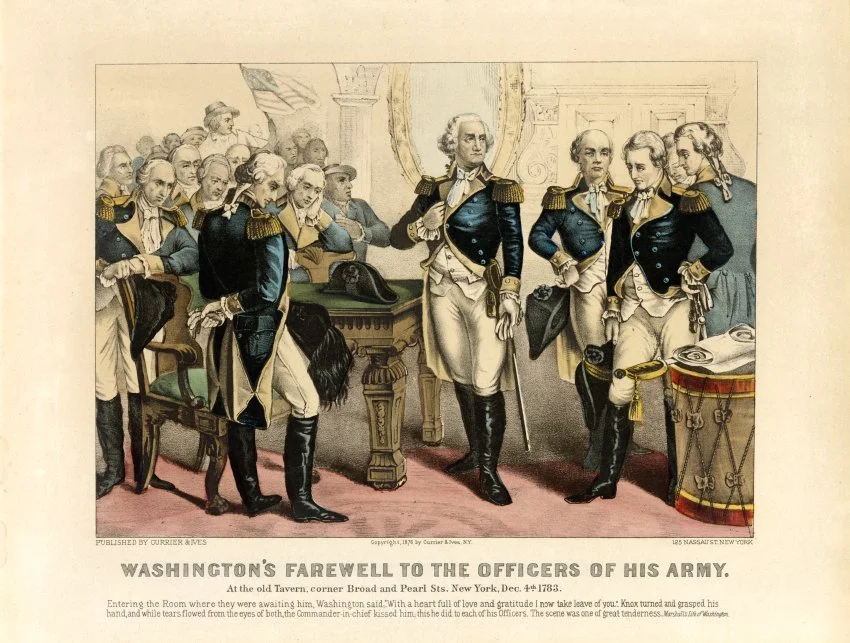
Washington's Farewell to the Officers of His Army. Courtsey of Fraunces Tavern Museum
When we observe Independence Day today, it is not just the act of adopting a document that we are commemorating, but the bravery of people who fought for the principles behind the document – the people who held on to their hopes amid years of war, and even the taverns that played a part in history.
Footnotes
[1] National Archives. The Declaration of Independence: A History.
[2] National Archives, Founders Online, "General Orders, 9 July 1776,"
[3] National Park Service, "James Forten and the Dunlap Broadside Declaration of Independence,"
[4] Pennsylvania Evening Post (Philadelphia, PA), July 5, 1777,
[5 ] National Archives, "The Declaration of Independence: A History."
[6] George Washington's Mount Vernon, "The Earliest July 4 Celebrations,"
[7] George Washington's Mount Vernon, "British Occupation of New York City,
[8] George Washington, “General Orders, 3 July 1778,”
References
George Washington’s Mount Vernon. “British Occupation of New York City.”
George Washington’s Mount Vernon. “The Earliest July 4 Celebrations.”
National Archives. “The Declaration of Independence: A History.”
National Archives. Founders Online. “General Orders, 9 July 1776.”
National Park Service. “James Forten and the Dunlap Broadside Declaration of Independence.”
Pennsylvania Evening Post (Philadelphia, PA). July 5, 1777.
“General Orders, 3 July 1778,” Founders Online, National Archives,