(Including Fraunces Tavern® Museum Book Award Presentation)
Monday, April 27, 2026
6:30pm Reception with brief remarks by Award winner
7:30pm Dinner, including author lecture, Q&A, and award presentation
Hosted by Sons of the Revolution℠ in the State of New York, Inc.
Since 1972, the Fraunces Tavern Museum Book Award has been presented annually to the author of the best newly published work on the American Revolutionary War, combining original scholarship, insight, and good writing. This award is one way the Museum fulfills its mission to educate the public about the Revolution and acknowledge the historical community dedicated to the study and public education regarding the American fight for freedom.
On April 27, 2026, Sons of the Revolution℠ in the State of New York, Inc. invite you to gather with them to commemorate the Battles of Lexington and Concord, which took place on April 19, 1775. At this commemoration, they will also honor the winner of the Fraunces Tavern Museum Book Award, presented annually to the author of the best newly published work on the American Revolutionary War that combines original scholarship, insight, and good writing. This year's winner is The Fate of the Day: The War for America, Fort Ticonderoga to Charleston, 1777-1780 by Rick Atkinson.
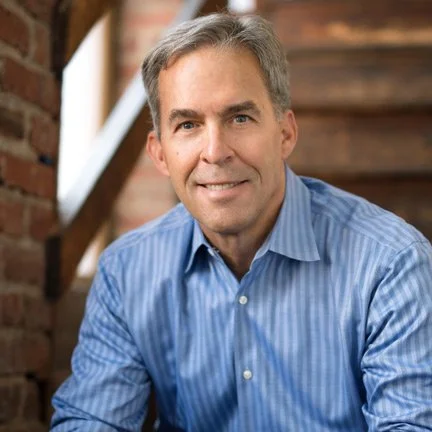
2026 Winner
Rick Atkinson, The Fate of the Day: The War for America, Fort Ticonderoga to Charleston, 1777-1780
Rick Atkinson
Rick Atkinson is the author of eight narrative histories about five American wars. His most recent book, The Fate of the Day: The War for America, Fort Ticonderoga to Charleston, 1777-1780, debuted as the #1 New York Times nonfiction bestseller. The New York Times Book Review declared, "This is great history...There is no better writer of narrative history than the Pulitzer Prize-winning Atkinson." Ken Burns wrote, "Rick Atkinson takes his place among the greatest of all historians. This superb second volume in his Revolution Trilogy is that rare narrative that keeps you on the edge of your seat."
The first volume in the Revolution Trilogy, The British Are Coming: The War for America, Lexington to Princeton, 1775-1777, spent nearly three months on the New York Times bestseller list in 2019. In 2020, The British Are Coming won the George Washington Prize for the year’s best work on the American founding era; the New-York Historical Society’s Barbara and David Zalaznick Book Prize, awarded annually to the best work in the field of American history and biography; the “Excellence in American History Book Award” of the Daughters of the American Revolution; and the Fraunces Tavern Museum Book Award.
Atkinson has served as the Gen. Omar N. Bradley Chair of Strategic Leadership at the U.S. Army War College, where he remains an adjunct faculty member. He is a Presidential Counselor at the National World War II Museum in New Orleans, an elected member of the Society of American Historians and the American Antiquarian Society, and an inductee in the Academy of Achievement, for which he also serves as a board member. He formerly served on the governing commission of the National Portrait Gallery of the Smithsonian Institution.
Born in Munich, Germany, Atkinson is the son of a U.S. Army officer and grew up on military posts. He holds a bachelor of arts degree from East Carolina University and a master of arts degree in English literature from the University of Chicago. He and his wife, Dr. Jane Chestnut Atkinson of Lawrence, Kan., a retired researcher and clinician at the National Institutes of Health, live in the District of Columbia. They have two grown children.
About The Fate of the Day: The War for America, Fort Ticonderoga to Charleston, 1777-1780
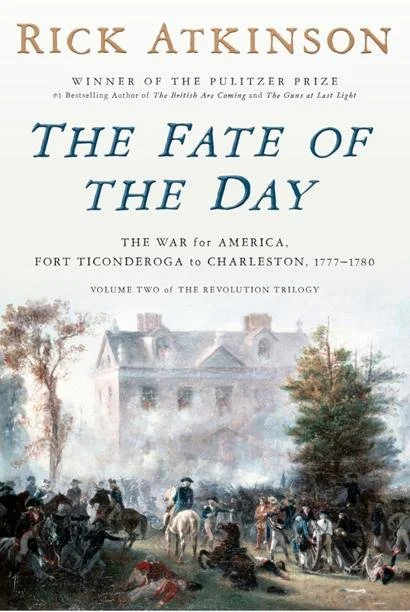
The first twenty-one months of the American Revolution—which began at Lexington and ended at Princeton—was the story of a ragged group of militiamen and soldiers fighting to forge a new nation. By the winter of 1777, the exhausted Continental Army could claim only that it had barely escaped annihilation by the world’s most formidable fighting force.
Two years into the war, George III is as determined as ever to bring his rebellious colonies to heel. But the king’s task is now far more complicated: fighting a determined enemy on the other side of the Atlantic has become ruinously expensive, and spies tell him that the French and Spanish are threatening to join forces with the Americans.
Prize-winning historian Rick Atkinson provides a riveting narrative covering the middle years of the Revolution. Stationed in Paris, Benjamin Franklin woos the French; in Pennsylvania, George Washington pleads with Congress to deliver the money, men, and materiel he needs to continue the fight. In New York, General William Howe, the commander of the greatest army the British have ever sent overseas, plans a new campaign against the Americans—even as he is no longer certain that he can win this searing, bloody war. The months and years that follow bring epic battles at Brandywine, Saratoga, Monmouth, and Charleston, a winter of misery at Valley Forge, and yet more appeals for sacrifice by every American committed to the struggle for freedom.
Timed to coincide with the 250th anniversary of the beginning of the Revolution, Atkinson’s brilliant account of the lethal conflict between the Americans and the British offers not only deeply researched and spectacularly dramatic history, but also a new perspective on the demands that a democracy makes on its citizens.
Honorable Mention
David Price, Winning the Ten Crucial Days: The Keys to Victory in George Washington’s Legendary Winter Campaign
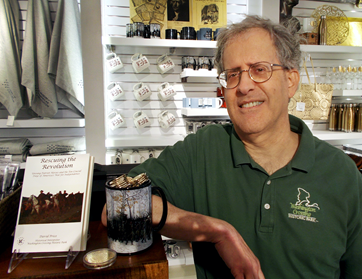
David Price
David is the author of five books about the American Revolution, which are available wherever books are sold.
A staff historical interpreter at Washington Crossing Historic Park in Pennsylvania and a volunteer interpreter at Princeton Battlefield State Park in New Jersey, David has written for the Journal of the American Revolution and the Journal of America's Military Past, and by invitation for the Princeton Battlefield Society's An American Revolution Diary, the Swan Historical Foundation newsletter, Discover Concord magazine, the Washington Crossing Historic Park Annual Program Book, and The Bann Disc (the journal of the Coleraine Historical Society in Northern Ireland). In addition, his work is recommended on various websites relating to the Revolutionary War.
David has spoken at numerous book lecture and signing events. He holds degrees in political science from Drew University and Rutgers University—New Brunswick, and was a nonpartisan research analyst with the New Jersey Legislature for thirty-one years. A resident of Lawrence Township, NJ (known as Maidenhead at the time of the Revolution), he is a member of various national and local organizations relating to the Revolutionary War.
About Winning the Ten Crucial Days: The Keys to Victory in George Washington’s Legendary Winter Campaign
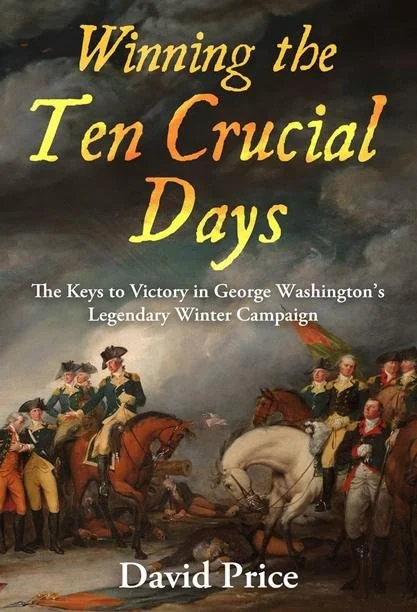
The “Ten Crucial Days” winter campaign of 1776-77 is one of the most storied in the annals of military history. David's newest book examines this pivotal moment in the American War of Independence through an interpretive framework that focuses on five key factors: leadership, geography, weather, artillery, and contingency. His narrative differs from earlier works on the subject that are largely a chronological account of this period.
The “Ten Crucial Days” were the canvas on which a masterpiece of bold and enterprising leadership was painted. It may have borne George Washington’s signature, but the brushes were furnished by the officers and common soldiers he commanded and the coloration made vibrant by the hues from various contributing factors: the quality of decision-making on both sides of the conflict, the nature of the terrain, the effects of weather, the roar of cannon fire, and the vagaries of fortune. The confluence of these overlapping factors seemingly conspired to frustrate British designs at a critical moment in their effort to overpower the American rebellion. Although each was important in its own right, their aggregate influence on the course of events reflected the mutually reinforcing nature of these elements.
The quality of leadership is the overriding factor in this analysis, for it was foundational to the issue of this campaign. Incompetent, unimaginative, or uninspiring direction of the Continental Army would not have rescued the rebellion from its military nadir over a fabled few days, regardless of how the other ingredients in Washington's recipe for victory came into play. On the other hand, leadership that met the moment—when combined with the auspicious effects of favorable geography, weather that accommodated the needs of an army, the adept use of numerically superior artillery, and fortuitous developments that fall under the rubric of contingency—could, and did, win the “Ten Crucial Days” and propelled the Revolutionary cause into a lengthy war of attrition that eventuated in American independence.
Honorable Mention
Gary Ecelbarger, George Washington’s Momentous Year: Twelve Months that Transformed the Revolution—Vol. 2: Valley Forge to Monmouth, January to July 1778
Gary Ecelbarger
Gary Ecelbarger has written seven books, co-written three others and is also the author of two dozen essays, journal and magazine articles about past events and personalities in American history. He claims ten direct-line ancestors who served as Patriot soldiers in the American Revolution. Born and raised in Western NY, ten miles upriver from Niagara Falls, Ecelbarger obtained his M.S. at the University of Wisconsin-Madison and has lived in Virginia for over twenty years with his wife and three children.
About George Washington’s Momentous Year: Twelve Months that Transformed the Revolution—Vol. 2: Valley Forge to Monmouth, January to July 1778
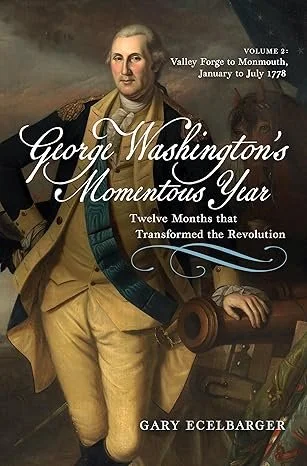
The second volume of George Washington’s Momentous Year picks up where Volume 1 concluded, in the wake of the Battle of Whitemarsh in early December 1777, with the British army returning to Philadelphia and French officials opening formal negotiations with American diplomats, primarily as a result of what they felt was a surprising and successful Philadelphia campaign by George Washington. Washington’s army now moved westward, across the Schuylkill River, to the most iconic encampment in American history: Valley Forge. Here the story is new and dynamic. Gary Ecelbarger’s original research revises the history of this crucial period, presenting for the first time Washington’s aggressive plan to attack Philadelphia soon after arriving at Valley Forge and the fact that the encamped army was much larger than previously understood.
During this time, Washington confronted challenges to his military authority while deftly solving crises of supply and recruitment. With the aid of Baron von Steuben, he established and trained the first American professional army. Following the Valley Forge encampment, the author takes the reader with the reinvigorated Continental army as it marches across the Schuylkill and Delaware Rivers and into New Jersey to confront Sir Henry Clinton’s crown forces on their way from Philadelphia to New York City. Having ordered an advance corps of veterans to engage the British, they make contact at Monmouth Courthouse near Freehold, New Jersey. As Washington approaches the action, he confronts thousands of his troops retreating around him. In one of the most stirring events of the Revolution, Washington is able to rally his men, reclaim the battlefield and achieve a hard-fought victory. The battle gave notice to the British that the American army would be a formidable foe going forward.
This engrossing history of the most significant twelve months of the American Revolution enables the reader to understand and appreciate the astounding accomplishment of George Washington and his military aides: the simultaneous emergence of a new, capable army and a strategy that would win the War for Independence.
Honorable Mention
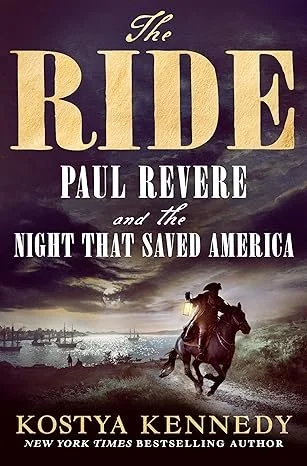
Kostya Kennedy, The Ride: Paul Revere and the Night that Saved America

Kostya Kennedy
KOSTYA KENNEDY is the Editor in Chief of Premium Publishing at Dotdash Meredith. A former Senior Writer and Editor at Sports Illustrated, he is the author of True: The Four Seasons of Jackie Robinson as well as the New York Times bestsellers 56: Joe DiMaggio and the Last Magic Number in Sports and Pete Rose: An American Dilemma. All three books won the CASEY Award for Best Baseball Book of the Year. He has taught at Columbia and New York University, and he lives with his family in Westchester County, New York
About The Ride: Paul Revere and the Night that Saved America
Timed for the 250th anniversary of America’s revolution and founding: Paul Revere’s heroic ride, newly told with fresh research into little-known aspects of the story Americans have heard since childhood but hardly understood
On April 18, 1775, a Boston-based silversmith, engraver, and anti-British political operative named Paul Revere set out on a borrowed horse to fulfill a dangerous but crucial mission: to alert American colonists of advancing British troops, which would seek to crush their nascent revolt.
Revere was not the only rider that night, and indeed, he had completed at least 18 previous rides across New England and other colonies, disseminating intelligence about British movements. But this ride was like no other, and its consequences in the months and years to come―as the American Revolution morphed from isolated skirmishes to a full-fledged war―became one of our founding legends.
In The Ride, Kostya Kennedy presents a dramatic new narrative of the events of April 18 and 19, 1775, informed by fresh primary and secondary source research into archives, family letters and diaries, contemporary accounts, and more. Kennedy reveals Revere’s ride to be more complex than it is usually portrayed―a loosely coordinated series of rides by numerous men, near-disaster, capture by British forces, and finally success. While Revere was central to the ride and its plotting, Kennedy reveals the other men (and, perhaps, a woman with information about the movement of British forces) who helped to set in motion the events that would lead to America’s independence.
Thrillingly written in a dramatic, unstoppable narrative, The Ride re-tells an essential American story for a new generation of readers.
About the Book Award
Which Books Qualify?
All qualifying book submission's thesis must align with the Museum's mission: Fraunces Tavern Museum’s mission is to preserve and interpret the history of the American Revolutionary era through public education. This mission is fulfilled through the interpretation and preservation of the Museum's collections, landmarked buildings and varied public programs that serve the community. Books written specifically about a topic relating directly to the American Revolutionary War will be given greater consideration. Books must be published within the calendar year under review / date published. Submissions for the 2027 Book Award are now open. Submissions will close on November 9, 2026.
How are Books Submitted?
Books are submitted to the Education & Public Programs Manager at Fraunces Tavern Museum. Only publishers, authors and similar book representatives may submit books. To contact the Manager, email:
programs@frauncestavernmuseum.org.
Submissions must include the following:
Two copies of the book
Book synopsis
Author's bio
Publisher's name
Book representative's contact information
Author(s) must be able to attend the Book Award Ceremony in order to officially receive the award.
Mail Book Award submissions to:
Fraunces Tavern Museum
Attn: Book Award Committee
54 Pearl Street, 2nd Floor
New York, NY 10004
When are winners notified?
The Book Award Winner, Runner-Up and Honorable Mention will be notified by the last week in February after the close of the qualifying year. Recipients will be notified using the submitted contact information.
The Winner and Honorable Mentions will be invited to attend the Museum’s annual Battles of Lexington and Concord Dinner & Fraunces Tavern® Museum Book Award Presentation in April, where they will be presented with the Fraunces Tavern Museum Book Award. Recipients must be able to attend the ceremony in order to officially receive the Book Award.
Past Recipients of the Fraunces Tavern Museum Book Award
2025 Winner
Gary Ecelbarger, George Washington’s Momentous Year: Twelve Months that Transformed the Revolution—Vol. 1: The Philadelphia Campaign, July to December 1777
2025 Honorable Mention
Alan Pell Crawford, This Fierce People: The Untold Story of America’s Revolutionary War in the South
Richard Brookhiser, Glorious Lessons: John Trumbull, Painter of the American Revolution
2024 Winner
Major General Jason Q. Bohm, Washington’s Marines: The Origin of the Corps and the American Revolution, 1775-1777
2024 Honorable Mention
Brooke Barbier, King Hancock: The Radical Influence of a Moderate Founding Father
Tom Hand, An American Triumph: America’s Founding Era Through the Lives of Ben Franklin, George Washington, and John Adams
2023 Winner
Eric Jay Dolin, Rebels at Sea: Privateering in the American Revolution
2023 Honorable Mention
Kenneth Scarlett, Victory Day: Winning American Independence - The Defeat of the British Southern Strategy
Stacy Schiff, The Revolutionary: Samuel Adams
2022 Winner
Kevin J. Weddle, The Compleat Victory: Saratoga and the American Revolution
2022 Honorable Mention
John Knight, War at Saber Point: Banastre Tarleton and the British Legion
Patrick K. O’Donnell, The Indispensables: The Diverse Soldier-Mariners Who Shaped the Country, Formed the Navy, and Rowed Washington Across the Delaware
2022 Special Recognition
Woody Holton, Liberty Is Sweet: The Hidden History of the American Revolution
2021 Winner
Mary Beth Norton, 1774: The Long Year of Revolution
2021 Honorable Mention
Nina Sankovitch, American Rebels: How the Hancock, Adams, and Quincy Families Fanned the Flames of Revolution
Andrew Waters, To the End of the World: Nathanael Greene, Charles Cornwallis, and the Race to the Dan
2020 Winner
Rick Atkinson, The British Are Coming: The War for America, Lexington to Princeton, 1775-1777
2020 Honorable Mention
John Buchanan, The Road to Charleston: Nathanael Greene and the American Revolution
T.H. Breen, The Will of the People: The Revolutionary Birth of America
2019 Winner
Joyce Lee Malcolm, The Tragedy of Benedict Arnold: An American Life
2019 Honorable Mention
Bob Drury & Tom Clavin, Valley Forge
Albert Louis Zambone, Daniel Morgan: A Revolutionary Life
2018 Winner
Russell Shorto, Revolution Song: A Story of American Freedom
2018 Honorable Mention
Harlow Giles Unger, First Founding Father: Richard Henry Lee and the Call for Independence
2018 Lifetime Achievement Award
Thomas Fleming, The Strategy of Victory: How General George Washington Won the American Revolution
2017 Winner
Alan Taylor, American Revolutions: A Continental History, 1750-1804
2017 Honorable Mentions
Larrie D. Ferreiro, Brothers at Arms: American Independence and the Men of France and Spain Who Saved It
Mark Edward Lender & Garry Wheeler Stone, Fatal Sunday: George Washington, the Monmouth Campaign and the Politics of Battle
2016 Winner
John Ferling, Whirlwind: The American Revolution and the War that Won It
2016 Honorable Mentions
Derek W. Beck, Igniting the American Revolution: 1773-1775
Don Glickstein, After Yorktown: The Final Struggle for American Independence
2015 Winner
Nick Bunker, An Empire on the Edge: How Britain Came to Fight America
2015 Honorable Mentions
Philip Papas, Renegade Revolutionary: The Life of General Charles Lee
Tim McGrath, Give Me A Fast Ship: The Continental Navy and America's Revolution at Sea