Kathy Fountaine, Communications and Marketing Manager, has been writing social media posts, Characters of Courage. Most of us know a little about Benjamin Franklin, John Adams, and Thomas Jefferson. Few of us know the others. Characters of Courage is a series of social media posts that introduce ALL 56 Signers through short bios. All deserved to be recognized for their sacrifices.
This social media series runs from January-December 2026 on Facebook and Instagram and is reproduced here. Some social media posts have not been posted yet as they run by birthday month of the Signer. The posts on this page are grouped by Colony.
NEW HAMPSHIRE:
Josiah Bartlett
December 2, 1729 - May 19, 1795
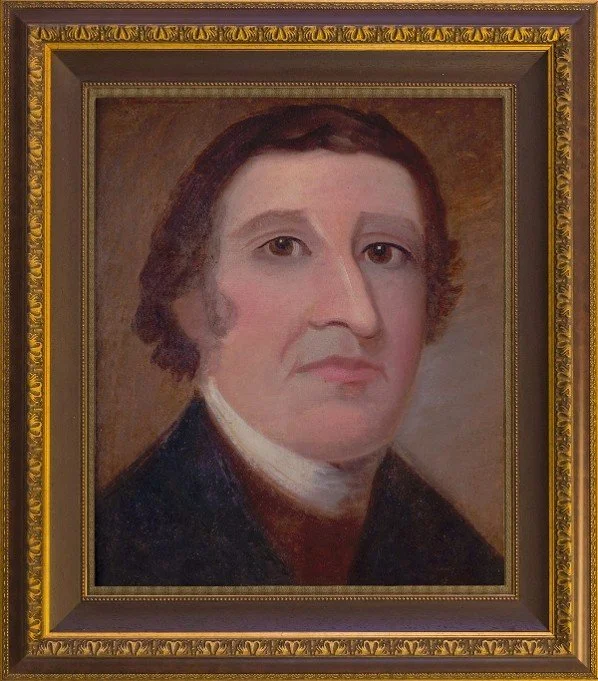
Josiah bartlett
After the adoption of the Lee Resolution and finalizing the Declaration of Independence text, Josiah Bartlett was the first to vote in favor of it on July 4 and the second to sign it on August 2.
Josiah Bartlett was a supporter of colonial interests and raised the Seventh Militia Regiment. He was appointed by Royal Governor Wentworth to serve as liaison between the Provincial Assembly and the Governor during the time of the Stamp Act. Governor Wentworth then appointed him justice of the peace and Lieutenant Commander of the Seventh Militia Regiment. The Governor recognized Bartlett’s talents and was trying to gain favor for the royalist cause.
However, Bartlett supported the Patriot cause. He became head of the Committee of Correspondence and was chosen to represent New Hampshire at Continental Congress; however, he could not attend because his home was burnt down which he blamed on Loyalists. He rebuilt his home in the same location, in Kingston, New Hampshire, where it still stands today.
Josiah Bartlett, Delegate from New Hampshire, signed the Declaration at the age of 46 and died at the age of 65.
William Whipple
January 14, 1730-November 28, 1785
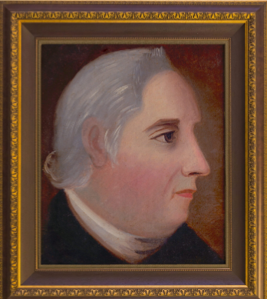
william whipple
After the adoption of the Declaration of Independence, William Whipple’s enslaved servant, Prince, pointed out that Whipple was fighting for freedom, but he had none to fight for. Whipple saw his point and offered Prince his freedom if he fought against the British.
Whipple commanded four regiments who fought in the Battle of Saratoga. Recognized for his leadership, Major General Gates named him as one of two men to determine the terms of capitulation by British General Burgoyne.
Whipple signed the Declaration as a delegate from New Hampshire at the age of 46 and died at the age of 55.
Matthew Thornton
March 3, 1714 - June 24, 1803
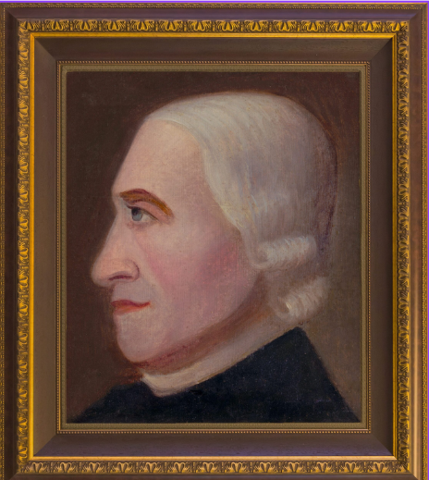
matthew thornton
New Hampshire delegate Matthew Thornton became one of six signers permitted to sign the Declaration of Independence after its official adoption; he was one of four physicians to sign it.
In 1775, Matthew Thornton condemned the acts of the British Parliament and was elected as President of the New Hampshire Provincial Congress. He was appointed Chairman of the Committee of Safety that oversaw raising troops and arms.
Dr. Thornton was a member of the committee to draft the first New Hampshire Constitution, which was adopted on January 5, 1776. He was elected to the Continental Congress in 1776 and took his seat in November 1776.
Matthew Thornton, Delegate from New Hampshire, signed the Declaration at the age of 62 and died at the age of 89.
MASSACHUSETTS:
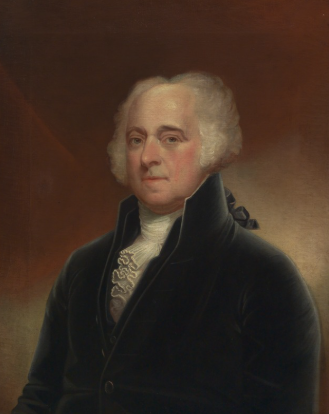
John Adams
October 30, 1735 - July 4, 1826
john adams
The Second President of the United States and Washington’s Vice President, John Adams was the first President to reside in the White House moving into the unfinished building on November 1, 1800.
John Adams defended the nine British soldiers involved in the Boston Massacre incident in 1770.Adams felt everyone deserved to be represented. This case was the first to use the standard of reasonable doubt and the first time a jury was sequestered. Although colonists were upset with the result, it was seen as a fair trial.
Adams was also the primary author of the Massachusetts Constitution. Adopted in 1780, it served as a model for the U.S. Constitution and is the oldest written constitution still in use today.
John Adams, Delegate from Massachusetts, signed the Declaration of Independence at the age of 40 and died at the age of 90.
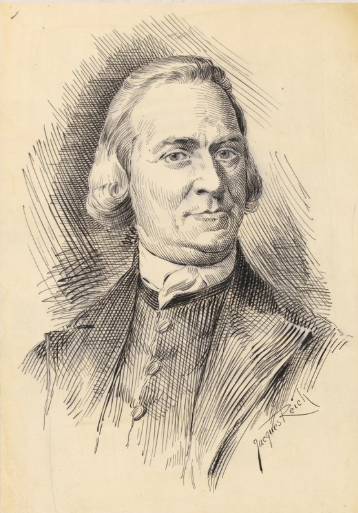
Samuel Adams
September 27, 1722 - October 2, 1803
samuel adams
Massachusetts delegate Samuel Adams was a second cousin to John Adams. He was a strong supporter of independence. Jefferson later credited Adams with steering Congress toward independence.
Samuel Adams started an anti-British newspaper and won his first election in 1747. As a tax collector he refused to collect taxes from anyone which made him popular with people but bankrupted the town. Due to his popularity, he was elected to several other offices.
During the Revolutionary War, Adams was instrumental in banishing about three hundred loyalists from Boston and opposed their return to Massachusetts following the war.
Samuel Adams, Delegate from Massachusetts, signed the Declaration of Independence at the age of 53 and died at the age of 81.
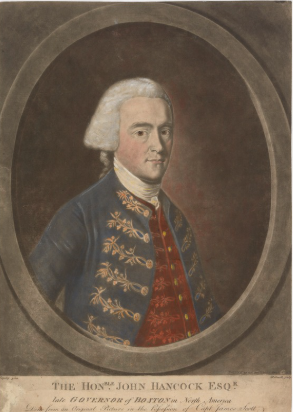
John Hancock
January 23, 1737 – October 8, 1793
john hancock
John Hancock is known for his large signature on the Declaration of Independence. He was a member of the Continental Congress from 1775-1780, serving as its president from May 1775 to October 1777.
John Hancock was president of the first and second Massachusetts provincial congresses and was a co-leader of the Massachusetts Patriots. He was forced to flee Lexington for Philadelphia when he was warned he was being sought by General Thomas Gage’s troops.
Hancock sought to become commander in chief of the Continental Army, but George Washington was chosen instead.
Hancock signed the Declaration at the age of 40 and died at the age of 56.
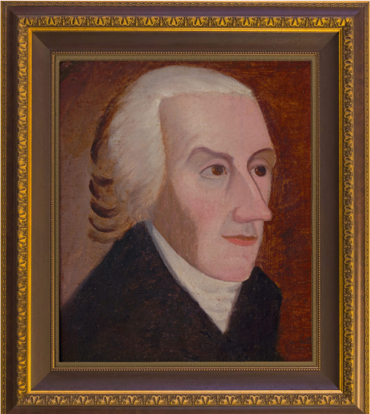
Robert Treate Paine
March 11, 1731 - May 11, 1814
robert treate paine
Robert Treat Paine led the prosecution of Captain Thomas Preston and eight soldiers under his command for the Boston Massacre. John Adams was the defense attorney.
Robert Treat Paine represented Massachusetts at Continental Congress. He was hesitant to cut ties with England as he hoped the formation of Congress would push the British to negotiate. Paine signed the Olive Branch Petition which was the final appeal to the king. After the king’s rejection of this petition, Paine realized war’s inevitability. When Congress voted for independence, Paine agreed and signed the Declaration of Independence.
While a member of Congress, Paine chaired the Committee on Ordnance, a committee of key political leaders who worked to organize the war effort. He pushed for the manufacture of gunpower, muskets, and artillery. He did this by publishing an article on the manufacture of saltpeter, sent reprints to the colonies and arranged for a reprint in Massachusetts. This was successful – several government-controlled mills were established.
Robert Treate Paine, Delegate from Massachusetts, signed the Declaration at the age of 45 and died at the age of 83.
Elbridge Gerry
July 17, 1744 - November 23, 1814
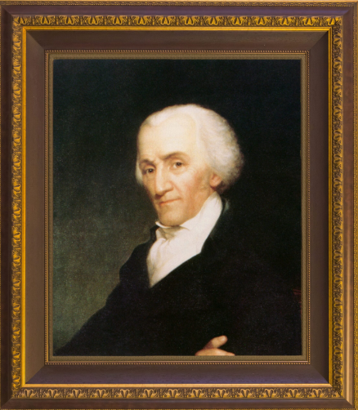
elbridge gerry
Massachusetts delegate Elbridge Gerry supported independence after the Boston Massacre but became less involved after the Boston Tea Party due to the violent actions of the Sons of Liberty. However, after the Intolerable Acts, he again supported independence.
Elbridge Gerry was a member of the Second Continental Congress and voted for independence. He was not present August 2nd to sign the Declaration of Independence but signed it on November 19, 1776. Later, he refused to sign the Constitution because it did not include a Bill of Rights. After the Constitution became law, Gerry was elected to the United States Congress, helping to draft and pass the Bill of Rights.
Gerry became Massachusetts Governor in 1810 and again in 1811. His administration became notorious for the division of electoral districts for political advantage, thus giving us the terms “Gerry-mander” and “Gerrymandering.”
Elbridge Gerry, Delegate from Massachusetts, signed the Declaration at the age of 32 and died at the age of 70.
RHODE ISLAND:
Stephen Hopkins
March 7, 1707 - July 13, 1785
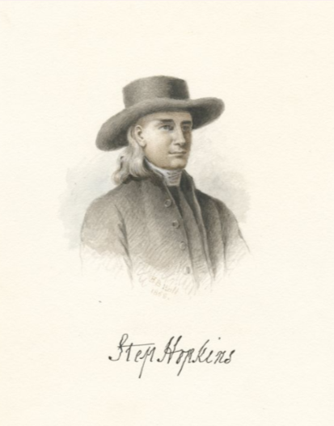
stephen hopkins
Stephen Hopkins, one of the oldest signers whose signature was shaky due to palsy, reportedly declared, “My hand trembles, but my heart does not!”
Stephen Hopkins wrote pamphlets attacking the Sugar Act and the Stamp Act. When John Hancock’s ship was seized and sent to Newport to become part of the Royal Navy, it was burned by an angry mob. The British ordered those that participated to be apprehended and tried, but Hopkins, as Chief Justice, refused to do so.
Stephen Hopkins, Delegate from Rhode Island, signed the Declaration at the age of 69 and died at the age of 78.
William Ellery
December 22, 1727 - February 15, 1820
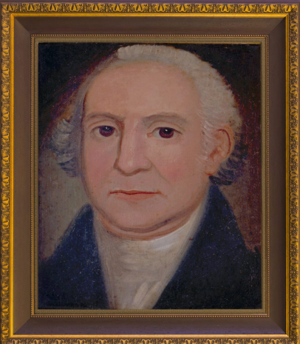
william ellery
Rhode Island delegate William Ellery resisted the British early on. He helped lead a group in a march through Providence to protest the Stamp Act.
In addition to protesting the Stamp Act, Ellery was in opposition of the British involving themselves in the colonies. The battle at Lexington and Concord strengthened this resolve stating there should be no negotiations with the British.
In 1776, Ellery became a delegate to the Second Continental Congress when Samuel Ward became ill. On July 2, he voted for the Lee Resolution and signed the Declaration of Independence on August 2. Ellery was a member of Congress until 1785, through the Articles of Confederation. He was also a member during the initial reevaluation of the Articles.
William Ellery, Delegate from Rhode Island, signed the Declaration at the age of 48 and died at the age of 92.
CONNECTICUT:
Roger Sherman
April 19, 1721 - July 23, 1793
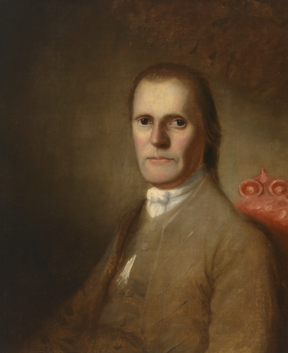
roger sherman
Connecticut delegate Roger Sherman was a member of the Committee of Five who drafted the Declaration of Independence.
In addition to signing the Declaration of Independence, Sherman signed the Continental Association agreement in 1774, Articles of Confederation in 1781, and the U.S. Constitution in 1787.
While serving at the Constitutional Convention, Roger Sherman proposed the Great Compromise, establishing a two-house legislature. He became mayor of New Haven, Connecticut, while serving simultaneously in other offices until his death.
Roger Sherman, Delegate from Connecticut, signed the Declaration of Independence at the age of 55 and died at the age of 72.
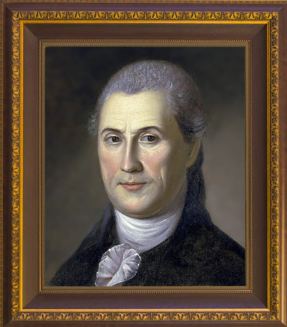
Samuel Huntington
July 16, 1731 - January 5, 1796
samuel huntington
Connecticut delegate Samuel Huntington was present on June 7, 1776, when the Resolution for Independence was introduced by Richard Henry Lee, voted for the resolution on July 2nd and voted for the revised language in the Declaration on July 4th. He signed the Declaration of Independence on August 2, 1776.
Samuel Huntington represented Norwich at the Connecticut Assembly. The Royal Governor, Jonathan Trumbull, appointed him as King’s attorney and then to the Connecticut Superior Court as Chief Justice, where he remained until 1778. While holding these positions, he voiced his opposition to the British Coercive Acts. In October 1775, he was elected as a delegate to the Second Continental Congress.
Samuel Huntington served in Congress until 1781. When John Jay vacated the position as President of Congress in 1779, Huntington took his place. He remained president until 1781.
Huntington returned to Connecticut and was named a delegate to Congress again, but he did not accept the position due to his health and other commitments. He returned to Congress in 1783, in time to see the end of the Revolution and the signing of the Treaty of Paris.
Samuel Huntington, Delegate from Connecticut, signed the Declaration at the age of 45 and died at the age of 64.
NEW YORK:
William Floyd
December 17, 1734 - August 4, 1821
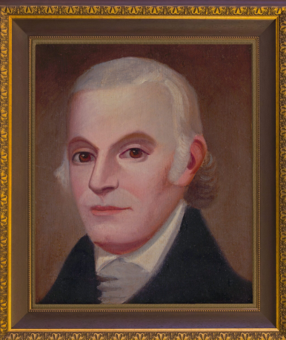
New York delegate William Floyd represented Suffolk County, New York, at the First and Second Continental Congresses. While away, the British took over Long Island and his family fled to Connecticut where his wife died.
From Suffolk County, New York, William Floyd was a prominent member of the community. He was a member of the Suffolk County Militia attaining the role of Major General. Eastern Long Island supported Massachusetts in its opposition to the Tea Act and protested the closing of Boston’s Port. Opposition to this and other acts operated on a county level, not on a Provincial level.
The British took over his home in Long Island, using it as barracks; the Loyalists also looted his property. When he returned with his children in 1783, he found his estate in ruins.
William Floyd, Delegate from New York, signed the Declaration at the age of 41 and died at the age of 86.
Philip Livingston
January 15, 1716-June 12, 1778
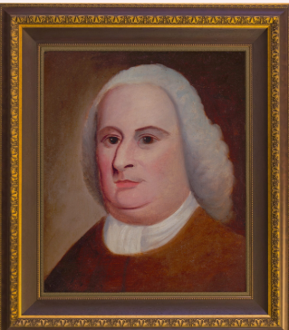
When the British took over New York City in August 1776, Livingston’s Manhattan residence was used as soldiers’ barracks and his Brooklyn estate as a Royal Navy hospital.
After the British takeover, Livingston and his family escaped to Kingston, New York, but the war followed them there. The British occupied Kingston and burned it to the ground since the state of New York’s constitution was written and adopted there.
Philip Livingston was a senator in the first New York legislature and was a member of the Continental Congress until his death in 1778 due to poor health.
Livingston signed the Declaration as a delegate from New York at the age of 60 and died at the age of 62.
Francis Lewis
March 21, 1713 - December 31, 1802
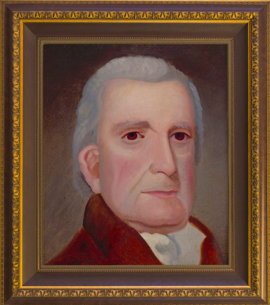
Taxation without representation was the issue that swayed Francis Lewis to support the American Revolution. He was one of New York City’s leading radicals and became a founding member of the New York City Sons of Liberty.
From Whitestone, New York, Lewis’ home was captured and his wife taken into custody at the Battle of Long Island (Brooklyn). She was eventually released in exchange for the wives of British officials. Because of the hardships due to her capture, his wife’s health declined, and she passed away a few years later. After she died, Lewis immediately left Congress.
He was a member of the First and Second Continental Congresses and signed the Olive Branch petition. On July 2, 1776, with the adoption of the Lee Resolution, New York’s delegates sent a message to the New York Provincial Congress asking for instructions about independence. New York abstained from voting on July 2 and July 4. Within a few days, they received authorization to join with the other colonies.
Today, a chapter of the Children of the American Revolution in Queens, New York, is named for Francis Lewis (francislewiscar.org).
Francis Lewis, Delegate from New York, signed the Declaration of Independence at the age of 63 and died at the age of 89.
Lewis Morris
April 8, 1726 - January 22, 1798
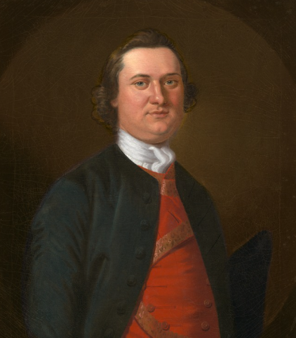
New Yorker Lewis Morris was a strong supporter of the Declaration of Independence. His half-brother, Gouverneur Morris, warned him what would happen if he signed the Declaration and advised him against it. Lewis’ reply was “Damn the consequences. Give me the pen.”
A member of the Second Continental Congress, Lewis Morris was in favor of separation from Britain, but the New York Assembly was not. On July 9, 1776, New York finally agreed to support independence. On July 11th, Morris and his fellow New York delegates approved the Declaration of Independence, which he later signed. He continued to serve in Congress until 1777.
The British invasion of New York left his estate in ruins. Fields and crops were destroyed, the house was looted, fences burned, and livestock slaughtered or driven away. After the war, Morris began restoring his estate and made time to serve as judge in Westchester County.
Lewis Morris, Delegate from New York, signed the Declaration at the age of 50 and died at the age of 71.
NEW JERSEY:
Richard Stockton
October 1, 1730 - February 28, 1781
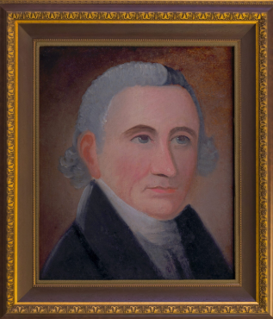
Although there were other Prisoners of War, Richard Stockton was the only signer imprisoned specifically for signing the Declaration of Independence.
After George Clymer and Richard Stockton helped the Continental Army in Fort Ticonderoga, Saratoga, and Albany, he was due to return to Continental Congress but took a detour to visit a friend. He was captured by Loyalists, stripped of his property and sent on a march to Perth Amboy, New Jersey, where he was given to the British. General William Howe offered Stockton and others the option of renouncing the Declaration of Independence and swearing allegiance to the King. Stockton refused which led to his being beaten, interrogated and starved. George Washington negotiated his release but by this time, Stockton had become ill. Upon his release, he resigned from Congress.
Richard Stockton, Delegate from New Jersey, signed the Declaration at the age of 46 and died at the age of 50.
John Witherspoon
February 5, 1723-November 15, 1794
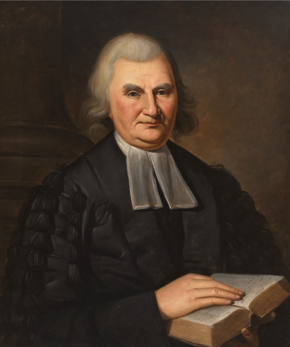
John Witherspoon, a Scottish-American Presbyterian minister, was the only member of the clergy to sign the Declaration of Independence. He strongly favored it.
Benjamin Rush and Richard Stockton recruited John Witherspoon to be the President of the College of New Jersey (Princeton). When the British marched to New Jersey, Witherspoon closed the college. The British took it over, burned its library, looted the area, and destroyed Witherspoon’s papers. One year later, Witherspoon’s son died during the Battle of Germantown.
John Witherspoon, Delegate from New Jersey, signed the Declaration at the age of 53 and died at the age of 71.
Francis Hopkinson
October 2, 1737 - May 9, 1791
Francis Hopkinson had many talents - writing, painting, music, design, politics, law. While living in England, he met painter Benjamin West with whom he took lessons.
Francis Hopkinson became a Customs Collector for New Castle, Delaware, and an Assemblyman for the New Jersey Royal Provincial Council. He was admitted to the New Jersey Bar in May 1775. He resigned his crown appointed positions and was elected delegate to the Second Continental Congress. He voted for the Lee Resolution and signed the Declaration of Independence on August 2; he left Congress later that year to devote more time to his law practice and serve on the Navy Board.
Francis Hopkinson, Delegate from New Jersey, signed the Declaration at the age of 38 and died at the age of 53.
Abraham Clark
February 15, 1726 - September 15, 1794
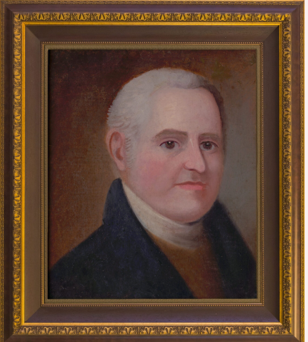
In addition to being a delegate to the Second Continental Congress, Abraham Clark was Secretary of the New Jersey Council of Safety, member of the Provincial Congress and served in the New Jersey state legislature.
Abraham Clark’s two sons served in an artillery regiment, were captured and held on the prison ship Jersey. Both sons survived and were returned in a prisoner exchange at the end of the war.
Clark was to serve in the Constitutional Convention but was unable to attend due to his health. However, he participated in the New Jersey Convention and was opposed to the Constitution until the Bill of Rights were added.
Abraham Clark, Delegate from New Jersey, signed the Declaration at the age of 50 and died at the age of 68.
PENNSYLVANIA:
Benjamin Franklin
January 17, 1706 - April 17, 1790
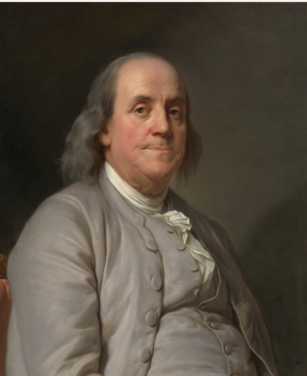
Benjamin Franklin was the oldest signer of the Declaration of Independence at age 70. He is well-known for being a scientist, inventor, writer, statesman, diplomat, printer, publisher and political philosopher.
In his will, Benjamin Franklin left Boston and Philadelphia with 2,000 pounds sterling each with a caveat. The money was to be placed in a trust for 100 years. After 100 years, part of the trust was to be used to establish trade schools or provide loans to local tradesmen. After another 100 years, the rest of the money could be accessed. By 1990, the funds were worth $4.5 million and $2 million respectively.
Franklin signed the Declaration of Independence at the age of 70 and died at the age of 84.
Robert Morris
January 31, 1734 - May 8, 1806
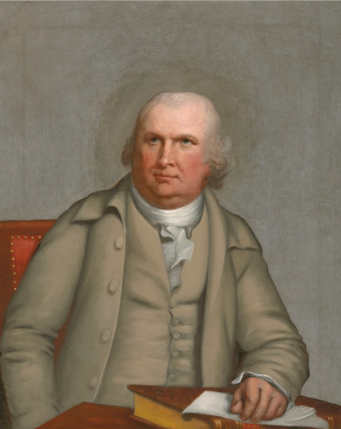
Hoping for a reconciliation with Great Britain, Robert Morris delayed his support of the Declaration of Independence. When the vote for independence was taken on July 2, Morris left the room so it could pass without his dissenting vote.
Robert Morris was Vice President of the Pennsylvania Committee of Safety, elected to the Pennsylvania Assembly, and a delegate to the Second Continental Congress.
During the Revolutionary War, Morris supplied the army with financial aid, weapons, and blankets. He was appointed as Superintendent of Finance in 1781, the first executive office in American history.
Faced with a serious governmental financial crisis, Morris submitted the first national funding proposal. This served as the basis for Hamilton’s plan a decade later during Washington’s administration.
Robert Morris, Delegate from Pennsylvania, signed the Declaration at the age of 42 and died at the age of 72.
Dr. Benjamin Rush
January 4, 1746-April 19, 1813
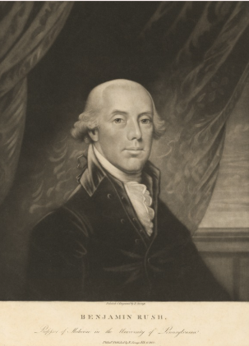
Despite joining Congress after the vote for independence, Dr. Benjamin Rush signed the Declaration of Independence. He was one of four physicians to do so.
Dr. Benjamin Rush joined the Sons of Liberty in the early 1770s and advised Thomas Paine during the writing of his book, “Common Sense.” He was credited with suggesting the title. Rush was a member of Pennsylvania’s Provincial Congress, and was one of the delegates to Continental Congress.
Benjamin Rush, Delegate from Pennsylvania, signed the Declaration at the age of 30 and died at the age of 67.
John Morton
c. 1725 - April 1, 1777
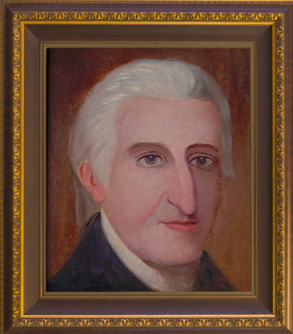
Pennsylvania delegate John Morton was the deciding vote for independence among the Pennsylvania delegation, breaking a tie with two Pennsylvania delegates abstaining, two voting no, and two voting yes.
John Morton was a Pennsylvania delegate who attended the Stamp Act Congress and was a delegate to the First and Second Continental Congresses. Because fellow Pennsylvania delegates Robert Morris and John Dickenson abstained from voting for independence, Thomas Willing and Charles Humphreys voting no, Ben Franklin and James Wilson voting yes, John Morton was the deciding vote; he voted for independence and signed the Declaration of Independence.
John Morton was the first signer to pass away. He never saw the revolution’s success and the formation of the new country.
John Morton, Delegate from Pennsylvania, signed the Declaration at the age of 51 and died at the age of 52.
George Clymer
March 16, 1739 - January 23, 1813
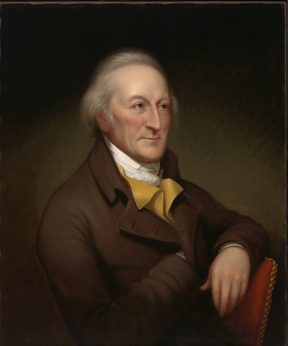
George Clymer was not present for the vote on the resolution on independence, voted on July 2, 1776, by the Second Continental Congress. He was, however, part of the Pennsylvania delegation that signed the Declaration of Independence.
George Clymer became involved in the early resistance against British taxation. Elected to Continental Congress in 1776, Clymer was not present for the July 2nd vote on the resolution for independence. On August 2, 1776, he was part of the Pennsylvania delegation that signed the Declaration of Independence.
During the war, British forces began to march toward his home in Chester County, Pennsylvania. This forced his wife and children to hide in the woods while the British troops vandalized their home.
George Clymer, Delegate from Pennsylvania, signed the Declaration at the age of 37 and died at the age of 73.
James Smith
September 17, 1719 - July 11, 1806
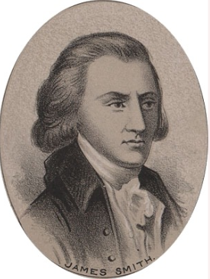
James Smith agreed that if the British used military force to make the colonies give in to the Crown, it was the colonies duty to resist. Smith urged others to adopt this same view.
In early 1774, James Smith attended a provincial assembly, offering a paper, Essay on the Constitution Power of Great Britain over the Colonies in America. In this paper, Smith recommended a boycott of British goods thinking if this hurt British merchants, it will force Parliament to change their laws.
Pennsylvania’s original delegates to Continental Congress were hesitant to support independence and new delegates were chosen, including Smith. After the Declaration was adopted on July 4th, Smith left for York, Pennsylvania, with a Dunlap printed broadside copy of the Declaration. On July 6th, it was read in York’s town square.
James Smith, Delegate from Pennsylvania, signed the Declaration at the age of 57 and died at the age of 87.
George Ross
May 10, 1730 - July 14, 1779
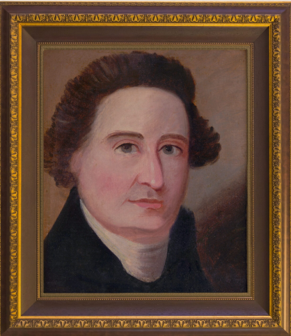
Pennsylvania delegate George Ross was the colony’s Crown Prosecutor to Carlisle, Pennsylvania, and loyal to the British. As a member of the Provincial legislature, he came to better understand the conflict, eventually choosing the side of independence.
In 1774, George Ross was elected to Pennsylvania’s provincial legislature that selected delegates to the First Continental Congress. In 1775, he became a member of the Committee of Safety. Although not a member of Congress when the vote for independence was taken, he was a representative for Pennsylvania on July 20, 1776, and signed the Declaration of Independence. Ross also served as a Colonel in the Continental Army.
George Ross, Delegate from Pennsylvania, signed the Declaration at the age of 46 and died at the age of 49.